Virtual Contrast Supervision: Why Technologist Readiness Matters for Centers
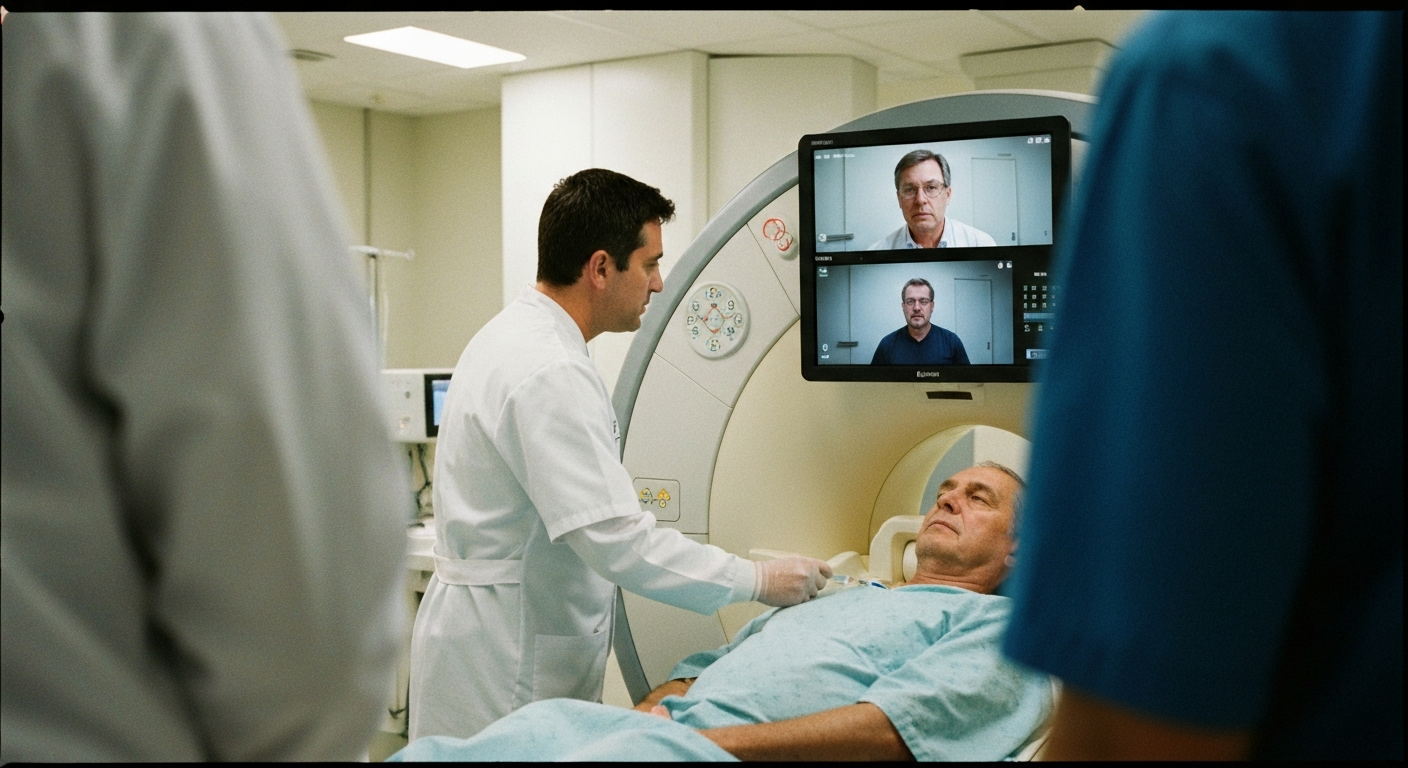
Key TakeawaysCMS made virtual direct supervision permanent on January 1, 2026, allowing real-time audio-video
Press Release Disclaimer: This is a press release distributed through the XPR Media network. It has not been independently verified by our newsroom.

Key Takeaways
- CMS made virtual direct supervision permanent on January 1, 2026, allowing real-time audio-video technology to satisfy direct supervision requirements for contrast-enhanced imaging
- CT technologist vacancies reached an all-time high of 19.4% in 2025, according to the American Society of Radiologic Technologists staffing survey
- On-site technologists now carry more responsibility for recognizing and responding to contrast reactions, making structured training programs essential for compliance
- Audio-only phone calls no longer satisfy CMS supervision rules, so imaging centers need documented, audit-ready proof of real-time audio-video availability for every exam
- What separates a compliant virtual supervision program from a risky one often comes down to how well the on-site team is trained and prepared
Imaging center directors have a new permanent rule to plan around, and it changes how contrast-enhanced exams get supervised for good. Effective January 1, 2026, the Centers for Medicare & Medicaid Services (CMS) locked in a policy that lets direct supervision happen through real-time, two-way audio-video technology instead of requiring a physician to stand in the building. That shift arrives at the exact moment staffing shortages are squeezing imaging departments harder than ever before.
CMS Makes Virtual Supervision Permanent in 2026
The rule applies to diagnostic tests billed under Medicare’s physician fee schedule, including contrast-enhanced CT and MRI exams that make up a large share of daily imaging volume. It also extends to hospital outpatient departments, physician offices, and Independent Diagnostic Testing Facilities, which widens the reach considerably for health systems running multiple site types. This is not a temporary pandemic-era waiver getting extended again; CMS finalized it as a lasting piece of the supervision framework.
For imaging center directors, permanence changes the calculus entirely. Temporary flexibilities invite a wait-and-see approach, but a permanent rule demands real infrastructure, protocols, and training investment. ContrastConnect, a remote contrast supervision provider, notes that technologist training for remote oversight is an important part of preparing onsite teams for this model, particularly as responsibility for patient care remains with staff at the imaging facility.
Directors who treat this as a scheduling convenience rather than a compliance obligation risk exposing their centers to real liability. The rest of this guide walks through what the rule requires, why workforce shortages make the stakes higher, and how training helps centers prepare for the operational and compliance demands of virtual supervision.
What the New Rule Actually Requires
The language sounds simple, but the operational details carry weight. CMS built specific guardrails into this rule to make sure “virtual” supervision still means the physician remains actively engaged, and imaging directors need to understand exactly where those lines sit before assuming a workflow qualifies.
Real-Time Audio-Video, Beyond a Phone Call
Audio-only communication, such as a phone call, does not meet the new virtual direct supervision standard. The supervising physician must be reachable through live audio-visual technology for the entire duration of the procedure, described as being “immediately available” throughout. A phone that goes to voicemail, or a physician mid-conversation on another line, fails to satisfy the requirement even if they eventually pick up.
Practically speaking, this means imaging centers need reliable video platforms, strong bandwidth, and backup connectivity plans. A dropped video call during a contrast injection is a potential supervision gap that could affect both patient safety and a claim’s compliance status, rather than a minor technical glitch.
Which Sites and Services Are Covered
The permanent rule covers a broad swath of imaging settings, which is good news for directors managing several locations under one compliance umbrella. Coverage includes:
- Physician offices and freestanding imaging centers
- Independent Diagnostic Testing Facilities (IDTFs)
- Hospital outpatient departments
Contrast-enhanced CT and MRI exams sit squarely within the scope, since these are the studies where a supervising physician’s judgment matters most if a reaction occurs. Directors overseeing multi-site operations should confirm that every location’s technology setup, staffing plan, and documentation process aligns consistently across the board, since inconsistent application across sites is one of the easier ways to trigger scrutiny.
A Workforce Crisis Meets a Policy Shift
The permanent supervision rule lands directly on top of a staffing shortage that has been building for years and shows no sign of easing on its own.
CT Vacancy Rate Hits an All-Time High of 19.4%
The American Society of Radiologic Technologists reported a 19.4% vacancy rate for CT technologists in its 2025 staffing survey, the highest figure the specialty has ever recorded. MRI technologist vacancies climbed too, reaching 17.4% and nearly tripling from a 6.2% rate just five years earlier. Those numbers translate into real scheduling headaches: fewer qualified hands available to cover shifts, longer wait times for patients, and mounting pressure on the technologists who remain.
The Bureau of Labor Statistics projects roughly 15,300 openings annually for radiologic and MRI technologists between 2025 and 2035, driven by both growth in imaging demand and workers leaving the field.
Why Technologists Are Leaving the Field
Several forces are pulling technologists away from the profession at once. An aging workforce is retiring faster than replacements are entering training programs, and burnout from stretched staffing ratios pushes even experienced technologists toward less demanding roles. Rising imaging volumes compound the problem, since fewer people are covering more exams each shift.
Workforce shortages carry consequences beyond scheduling frustration. Delayed diagnoses and treatments can result when imaging departments cannot keep pace with demand, and that delay matters most for time-sensitive conditions where speed affects outcomes. Virtual supervision provides a partial answer here, since it lets a single supervising physician cover multiple sites remotely, but it only works safely when the technologists on-site are fully prepared to act as the physician’s eyes and ears.
Why the On-Site Technologist Becomes the Critical Link
Once a supervising physician is participating through a screen rather than standing in the room, the on-site technologist takes on a heavier share of the responsibility. Remote supervision can also allow less experienced technologists to perform more complex exams with real-time coaching from remote experts, which is a genuine benefit, but it only works if the technologist knows how to communicate clearly and act quickly when something goes wrong.
Recognizing and Responding to Contrast Reactions
The on-site technologist becomes the direct link to the remote physician, and that role calls for confidence in recognizing early signs of a contrast reaction, whether it presents as mild hives or a more serious response requiring immediate intervention. Contrast media must still be administered by a qualified and licensed individual, such as a technologist or nurse, even under a virtual supervision model. Training needs to cover not just recognition, but the sequence of actions that follow: alerting the remote physician immediately, initiating emergency protocols, and documenting the event accurately.
ACR Standards for Emergency Readiness
The American College of Radiology permits virtual direct supervision of contrast administration, provided that trained personnel and emergency protocols are in place and the practice complies with all federal, state, and local regulations. Facilities administering IV contrast need on-site staff qualified to manage contrast reactions along with ready access to emergency equipment and medications. Meeting that standard means more than stocking a crash cart; it means every technologist on shift has practiced the response drill enough times that it becomes second nature under pressure.
Staying Audit-Ready Under Virtual Models
Compliance does not end once a procedure goes smoothly. Imaging centers operating under virtual supervision need to prove, on paper, that every requirement was met for every exam, every time.
Documenting Physician Availability for Every Exam
Facilities must maintain audit-ready documentation proving physician availability, the supervision method used, and confirmation of real-time communication for each exam performed. That means logging which physician supervised each procedure, what platform carried the audio-video connection, and any notes on technical performance during the exam. Gaps in this documentation create exposure during a Medicare audit, regardless of whether the actual supervision itself was flawless.
Legal Defensibility of Remote Coverage
The legal defensibility of a remote supervision model depends on physician response time, the quality of the communication platform, and clear, documented protocols that staff actually follow in practice. A center can have excellent technology and still face liability if technologists were never trained on escalation procedures or documentation standards. Building defensibility means treating training and technology as equal partners, not treating one as a substitute for the other.
Training Readiness Determines Compliance Success
The permanent supervision rule creates opportunities for imaging centers, particularly in rural and underserved areas where on-site physician coverage has been limited. Remote supervision can help facilities keep contrast-enhanced exams running without turning patients away or requiring longer travel.
But that opportunity depends on technologists being prepared for the responsibilities of virtual supervision. A standardized readiness program can support consistency, compliance, and confidence across shifts and locations. Directors should ask whether every technologist can confidently manage a contrast reaction and document it correctly under a virtual supervision model.
For imaging centers building their 2026 compliance plans, structured technologist training programs for virtual contrast supervision can help bridge the gap between policy and daily practice. As remote supervision becomes part of everyday operations, technologist readiness becomes essential to making the model work safely and consistently.
ContrastConnect
Las vegas
Las Vegas
NV
89109
United States