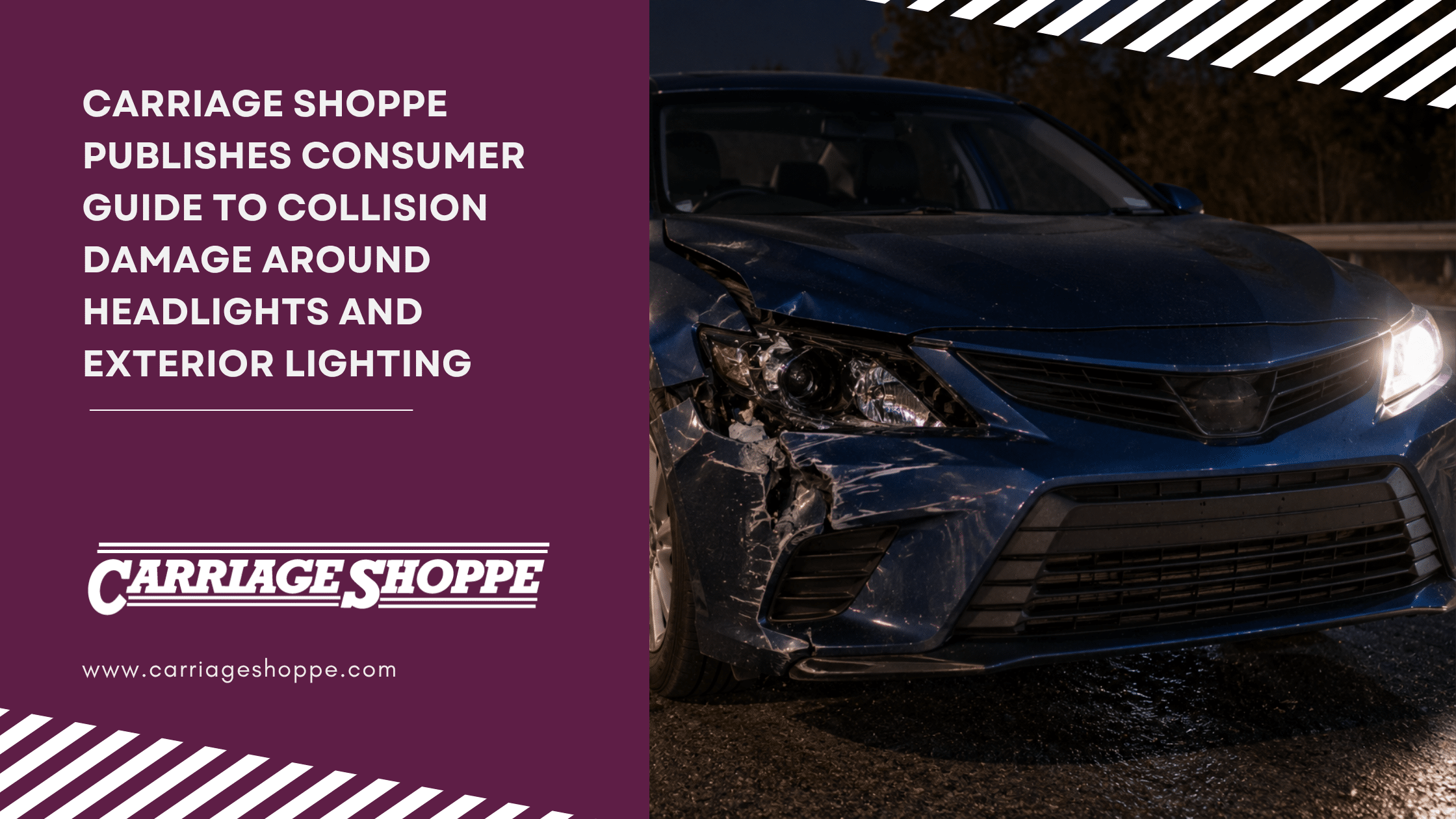
Carriage Shoppe Publishes Consumer Guide to Collision Damage Around Headlights and Exterior Lighting
Fort Collins, CO - October 16, 2026 - PRESSADVANTAGE - Carriage Shoppe has published new consumer guidance explaining
Press Release Disclaimer: This is a press release distributed through the XPR Media network. It has not been independently verified by our newsroom.

Fort Collins, CO – October 16, 2026 – PRESSADVANTAGE –
Carriage Shoppe has published new consumer guidance explaining how collision damage around headlights and other exterior lighting components can be evaluated during repair planning. The October resource focuses on how technicians consider the lamp assembly, mounting points, adjoining body panels, wiring, and vehicle-specific repair information when an impact occurs near an exterior light.
Headlights, taillights, and other exterior lamps are positioned where collision damage can involve several closely connected components. A damaged light may be immediately visible after an accident, while changes involving its mounting areas or surrounding panels can require a more detailed evaluation.
The new guidance adds a lighting-specific explanation to Yoder Collision Network’s existing collision repair information by concentrating on the relationship between exterior lamps and the components that position and support them.
An initial inspection begins with conditions that can reasonably be observed. A collision may leave a headlight or taillight with a cracked lens, damaged housing, displaced position, broken exterior surface, or other visible condition. Technicians can also document damage to nearby bumpers, fenders, hoods, quarter panels, liftgates, or other components.
A lamp that continues to illuminate after a collision is not necessarily free from physical damage. Electrical operation and physical condition are separate considerations. The assembly may still require evaluation for damage involving its housing, mounting locations, or relationship with surrounding components.
Mounting points are particularly relevant because exterior lamps must remain positioned within the vehicle body. Depending on the design, a lamp assembly can use tabs, brackets, fasteners, or other attachment points that connect it to nearby structures or body components.
An impact can affect these areas differently from the visible portion of the lamp. A lens may show limited exterior damage while an attachment point has been affected, or visible damage to a surrounding panel may occur without documented damage to the lamp itself.
The October guidance therefore emphasizes evaluation of the actual components involved rather than assuming the condition of a light based on whether it still operates or how severe the exterior damage appears.
Adjoining body panels provide another part of the evaluation. At the front of a vehicle, headlights can be positioned alongside the hood, fenders, grille, and bumper. At the rear, lamps may be located next to quarter panels, trunk lids, liftgates, or bumper components.
Changes in the fit or position of these surrounding parts can provide information about areas that may require closer evaluation. Panel spacing alone does not establish the extent of collision damage, but documenting the relationship between the lamp and adjoining components can help technicians develop the repair plan.
Additional information about repairing damaged exterior panels and components is available through Yoder Collision Network’s auto body repair information.
Appropriate access can also provide information that is unavailable during the initial exterior inspection. Bumper covers, trim, liners, or adjoining components may restrict access to lamp mounting points, wiring connections, brackets, and nearby areas.
When removal of these components is appropriate to the repair, technicians can document the condition of previously covered areas. Additional access does not establish that concealed damage exists. It allows relevant components to be evaluated based on their actual condition.
Modern exterior lighting can also incorporate electronic technology beyond the basic function of illuminating the roadway. Depending on the vehicle and equipment, lamp assemblies can contain electronic controls, specialized lighting elements, wiring, or other integrated features.
The specific configuration can vary by model year, trim level, and vehicle equipment. Identifying the individual vehicle is therefore important when determining which technical information applies to the lighting components involved in a collision.
Manufacturer repair information may address lamp removal and installation, mounting requirements, component replacement, aiming or adjustment procedures, wiring considerations, or other operations associated with a particular vehicle.
Yoder Collision Network provides additional information about manufacturer-specific repair considerations through its OEM certification information.
The October resource also distinguishes lighting damage from damage to nearby cameras and sensors. Modern front and rear vehicle areas can contain multiple electronic components positioned near one another, but the presence of this technology does not mean every system in the area has been affected.
Instead, repair planning identifies the vehicle, documents the collision location and affected components, and determines which manufacturer procedures correspond to the work being performed.
This component-level approach can help explain why two vehicles with similar-looking headlight or taillight damage may receive different repair plans. Lamp design, mounting methods, adjoining body construction, installed equipment, and manufacturer procedures can vary considerably between vehicles.
The guidance also provides context for repair-versus-replacement decisions involving exterior lighting. A damaged mounting area, housing, lens, or integrated component may have different repair considerations depending on its construction and applicable technical information. The visible size of the damaged area alone does not determine the appropriate operation.
By publishing the October guidance, Carriage Shoppe is adding an exterior-lighting-specific resource to its consumer repair information. The new material concentrates on the parts of lighting evaluation that may be less apparent after an accident, particularly mounting areas, surrounding body components, access requirements, and vehicle-specific procedures.
The central takeaway is that collision damage around a headlight or other exterior light is evaluated as more than an isolated cosmetic issue. The lamp assembly, its mounting points, adjoining panels, electrical connections, and applicable manufacturer information can each provide relevant information when the repair plan is developed.
Carriage Shoppe is part of Yoder Collision Network and provides collision and auto body repair services at 327 S Link Ln, Fort Collins, CO 80524. The facility provides body and structural repair, refinishing, vehicle measuring, diagnostic procedures, and related collision repair services.
###
For more information about Carriage Shoppe, contact the company here:
Carriage Shoppe
Micah
970 482 3597
officestaff@carriageshoppe.com
327 S Link Ln, Fort Collins, CO 80524